
MEASURED, NOT RATED
Two photos. 75 measurements.
GlowAI takes 75 geometric measurements from two photos, scores each against published ideal ranges, and shows you which ones are worth changing.


Free · iOS and Android
| Platform | iOS, Android |
|---|---|
| Requires | iOS 15.5 or later; Android 9 or later |
| Price | Free to download |
| Category | Beauty |
| What it measures | 75 geometric facial metrics from two photos |
| Page updated |
How it works
From two photos to a number you can check.
Four steps, identical every time. Nothing in them votes on how you look.
Two photos
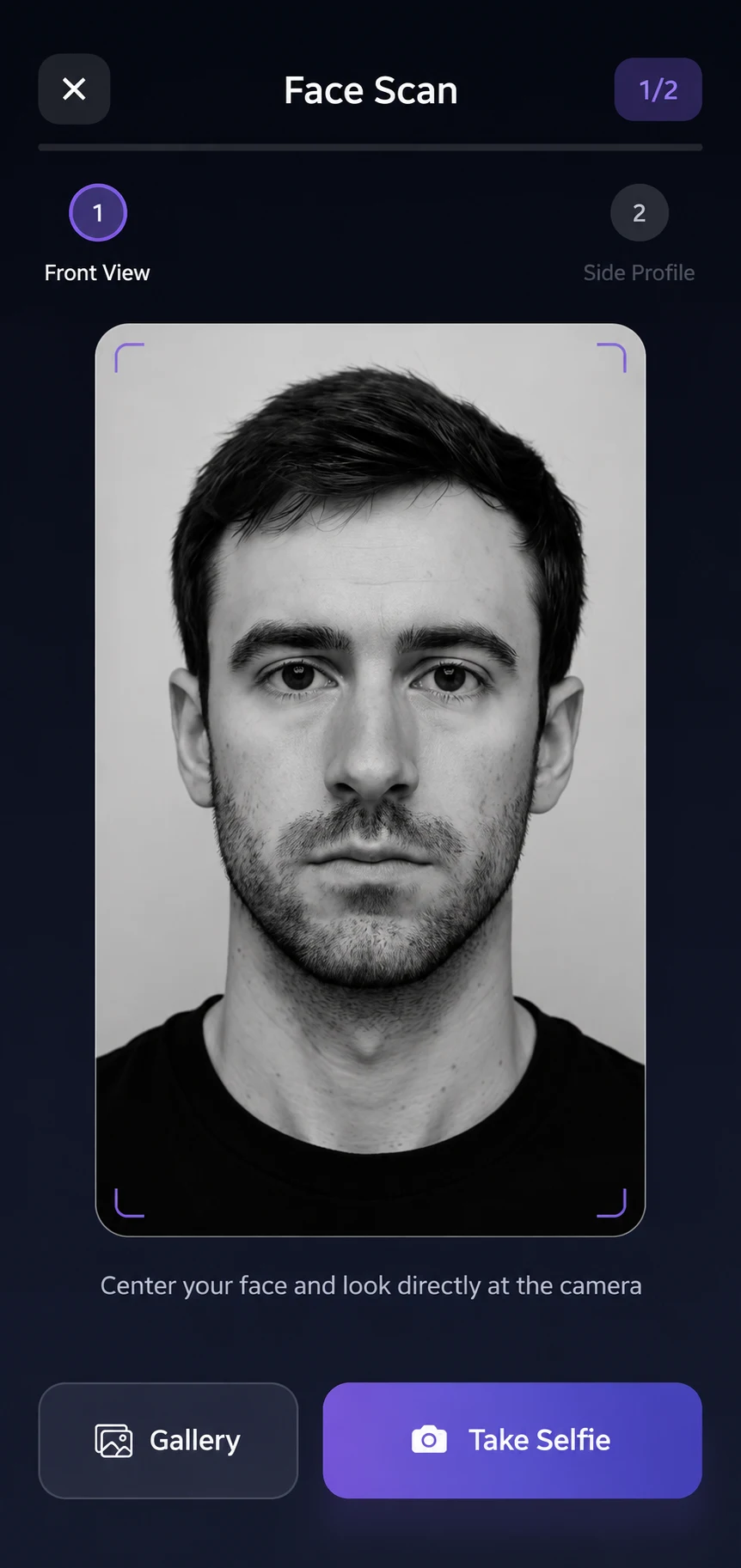
A front shot and a side profile. A pose and blur gate rejects anything it can’t measure properly, rather than scoring a bad photo.
468 landmarks
Facial landmark detection places 468 points on each image: eye corners, alar base, vermilion border, gonion.
75 measurements
A deterministic engine computes 75 geometric ratios, angles and distances, and scores each against its published ideal range.
Score and plan
The measurements roll up into a harmony score and tier, then get ranked by which ones you could actually move.
The measurement
Every point, placed precisely.
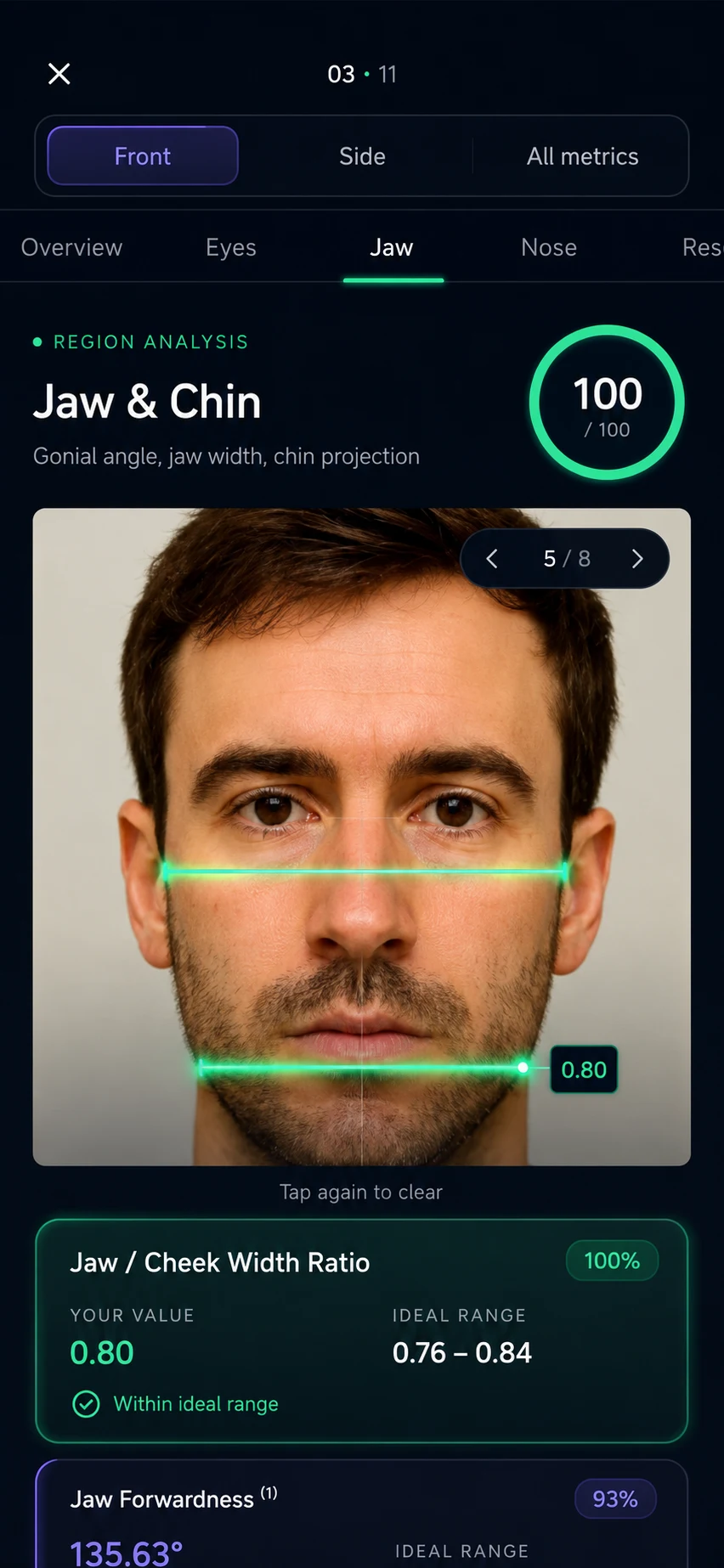
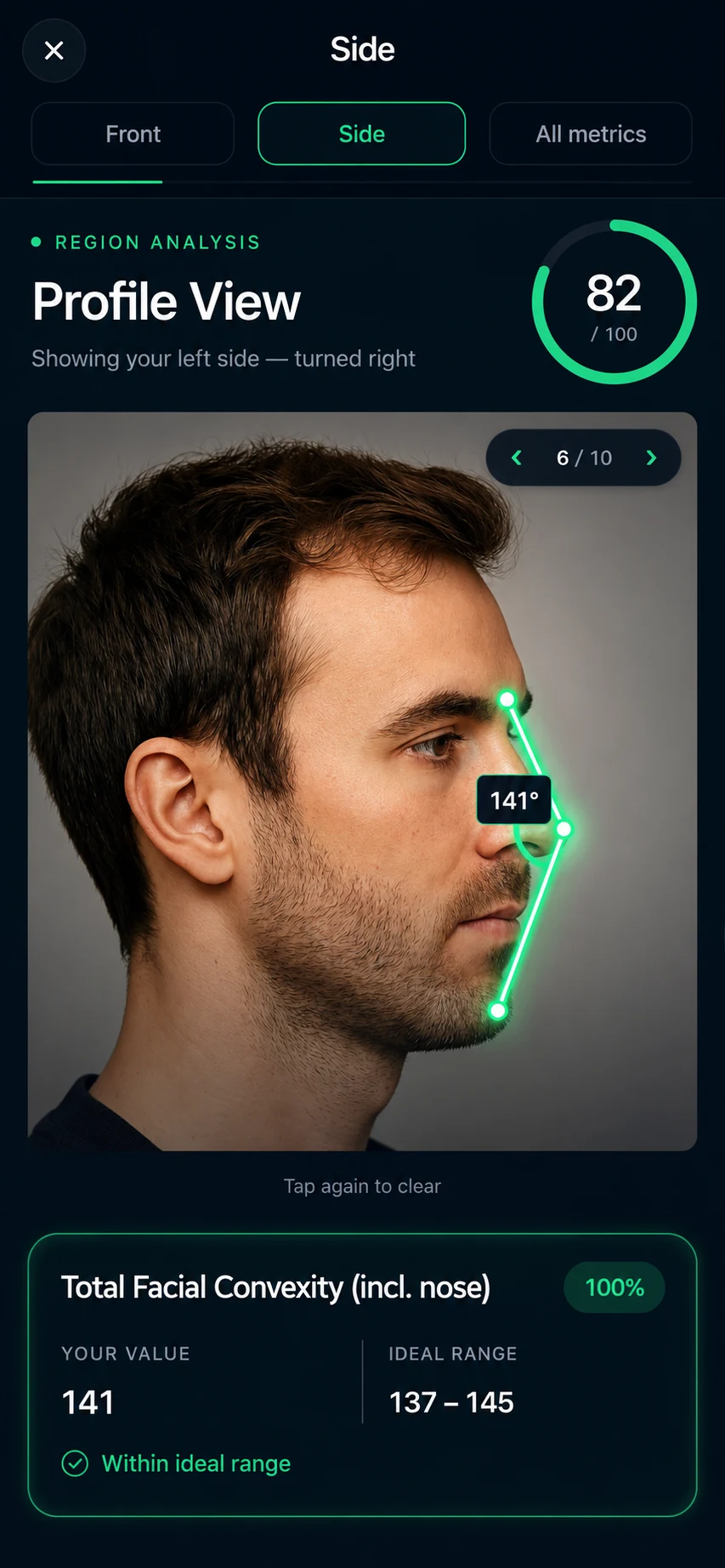
468 landmarks per photo: eye corners, alar base, vermilion border, gonion. The distances and angles between them are the measurements themselves (canthal tilt, FWHR, gonial angle, midface ratio), and the screens here show them exactly as the app does.
What you’ll see
Every measurement is shown with your reading, its ideal range, and the study it comes from. The readings here are illustrative; yours come from your own photos.
Ranges drawn from published facial anthropometry: Farkas, Powell, Naini, Sarver, Mommaerts and others.
How the score is builtComposite, 0-100. Rolled up from all 75 readings, weighted toward the measurements the literature ties most strongly to perceived harmony.
What gets measured
75 measurements. Six clusters.
Every measurement is shown with your reading, its ideal range, and its citation. 49 of the 75 use different ranges for men and women, because the research does.
- 14JawGonial angle · Jaw/cheek width · Ramus
- 14EyesCanthal tilt · Eye spacing · Canthal angle
- 12NoseNasal width · Nasofrontal angle
- 10LipsUpper-to-lower ratio · Philtrum
- 10ProportionsFacial thirds · Fifths · Lower face
- 7MidfaceFWHR · Midface ratio · Tapering
Eight further metrics feed a separate bilateral symmetry score.
Where you land
A tier you can trace back to a measurement.
Your score maps onto the plain-language tier and the PSL tier the looksmax community actually uses. Both come from the same measured number.
- 98+True AdamApex
- 94-97Adamlite
- 88-93ChadElite
- 82-87Chadlite
- 72-81HTNAbove average
- 55-71MTNAverage
- 40-54LTNBelow average
- 28-39Sub5
- 18-27Sub3
The tier is the least useful part of your result. The ranked list of fixable measurements underneath it is the part you can act on.
Every tier explainedYour AI coach
AI that has read your measurements.
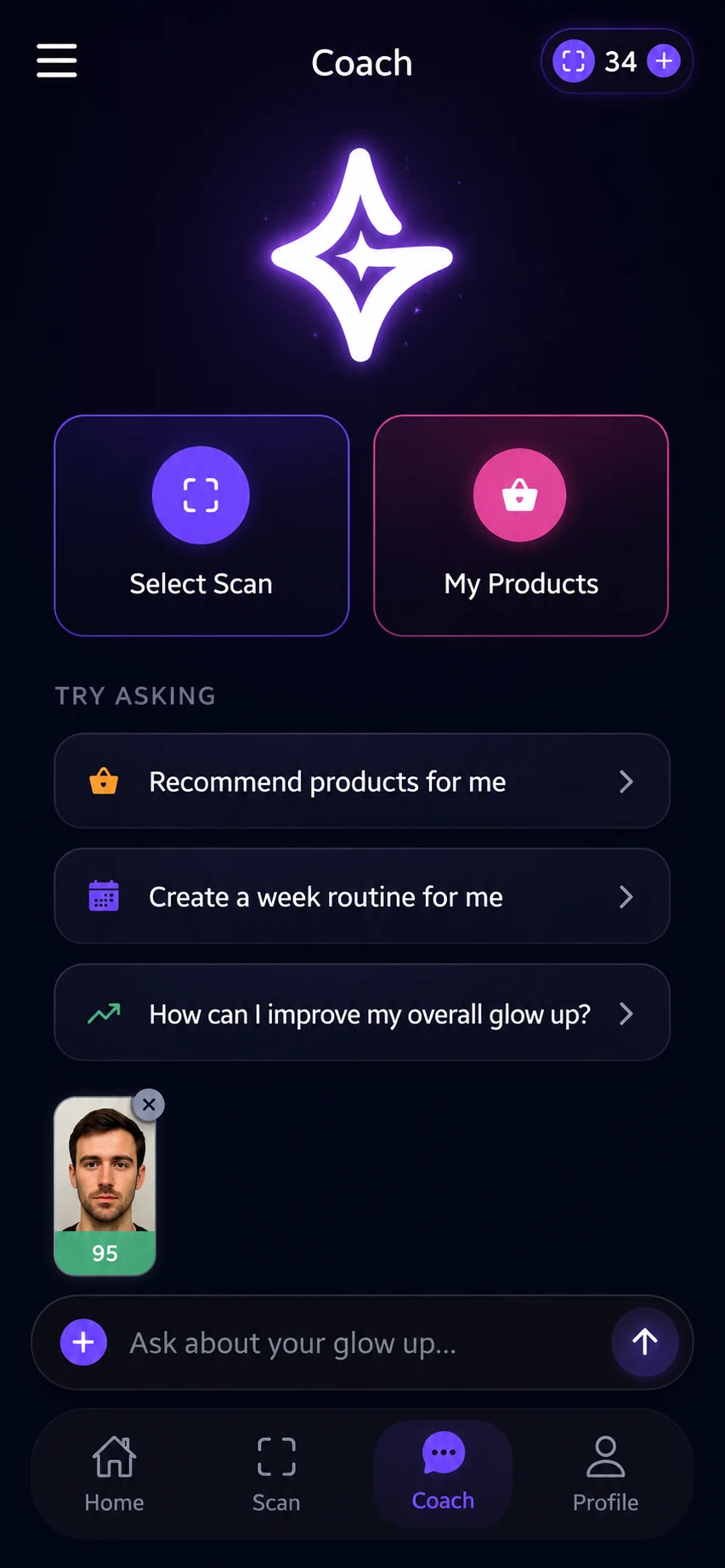
The coach sees your actual numbers: which ratios came back weak, which are already inside their range. Ask anything and the answer is built around your face rather than generic advice.
Your daily plan
A plan built from your numbers.
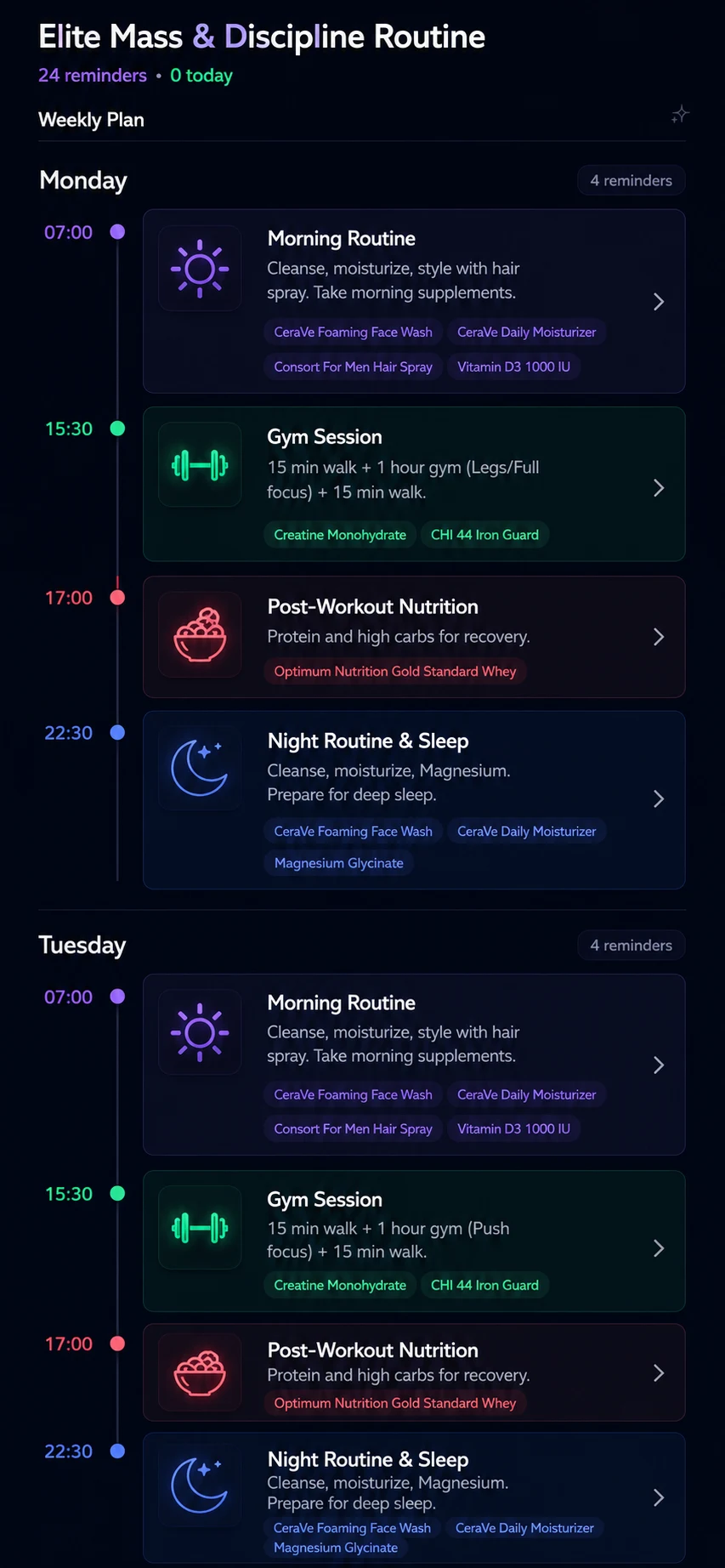
Morning and evening, built around the measurements you can actually move, and explicit about the ones you can’t. Re-scan and the plan updates against the new numbers.
The boundaries
The things we deliberately left out.
The golden ratio is shown, not scored
Phi and the classical canons are computed and displayed, but kept out of the composite. They’re art-historical prescriptions rather than research findings.
Percentiles only against real users
You’ll never see “top 3% worldwide”, because nobody has that dataset. Percentiles are stated against GlowAI’s own users, and labelled that way.
A score, never a verdict
The composite is a geometric score. It describes proportions against published ranges, and it says nothing about how attractive you are or about your worth.
Free and paid
What costs nothing, and what doesn’t.
Free
- Your first scan, from two photos
- The full harmony score and PSL tier
- A guided look at your top three fixable measurements
Paid
- Coach memory across conversations
- Routine planning with reminders
- Additional scan credits
Prices are shown in the App Store and Google Play before any charge; billing and refunds run through the stores.
Honest answers
What you’re probably wondering.
Sources
Ideal ranges are taken from published anthropometric literature. Every metric in the app carries its own citation; these are the works the set is built on.
- Farkas LG. Anthropometry of the Head and Face. 2nd ed. Raven Press, 1994. (opens in a new tab)
The reference dataset for human craniofacial measurement, the source of most normative ranges in use today.
- Powell N, Humphreys B. Proportions of the Aesthetic Face. Thieme-Stratton, 1984. (opens in a new tab)
Defines the profile angles, nasofrontal, nasofacial, nasomental, mentocervical, used in the side-profile analysis.
- Naini FB. Facial Aesthetics: Concepts and Clinical Diagnosis. Wiley-Blackwell, 2011. (opens in a new tab)
Modern synthesis of facial proportion assessment, and the source for several vertical-thirds and horizontal-fifths ranges.
- Sarver DM. Esthetic Orthodontics and Orthognathic Surgery. Mosby, 1998. (opens in a new tab)
Soft-tissue analysis of the face: lip projection, smile arc and incisor display.
- Mommaerts MY, et al. Published work on facial proportion and orthognathic planning. (opens in a new tab)
Current maxillofacial ranges, covering the midface and chin projection.
- Steiner CC. Cephalometrics for you and for me. Am J Orthod, 1953. (opens in a new tab)
The Steiner analysis, the cephalometric baseline for skeletal relationships.
- Tweed CH. The Frankfort-mandibular incisor angle in diagnosis and treatment planning. (opens in a new tab)
The Tweed triangle, behind the mandibular-plane and incisor-angle metrics.
- Google. MediaPipe Face Mesh / Face Landmarker. (opens in a new tab)
The landmark detector that places 468 points on each photo, before any measurement is computed.
Updated
The app
Get your harmony score. The first scan is free.
75 measurements, your PSL tier, and the three fixes that would move your score most.

Scan to install on your phone.